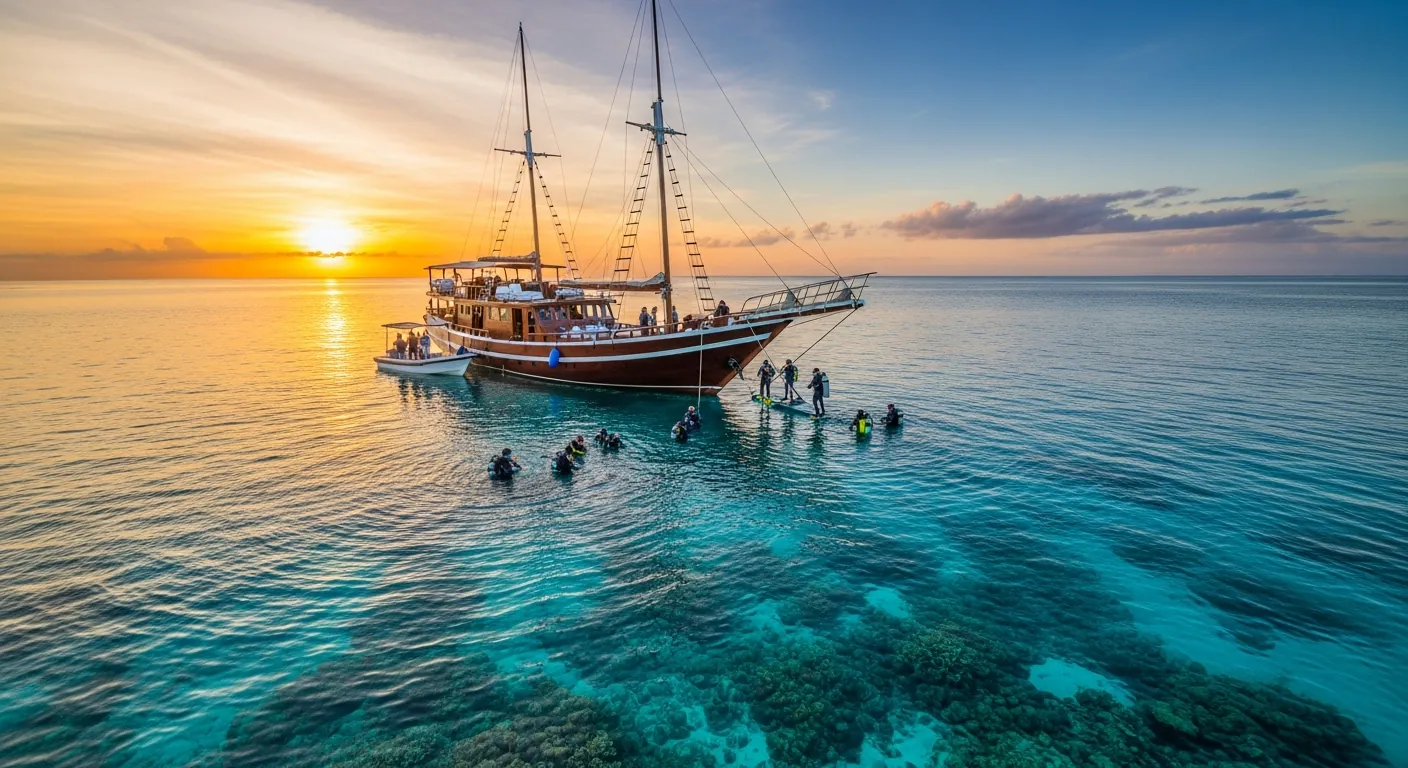
The rhythmic creak of timbers, the salt spray on deck, and the distant rumble of an approaching dive skiff define the initial moments of a phinisi liveaboard journey. Beneath the surface, the Coral Triangle’s biodiversity manifests in kaleidoscopic reefscapes and pelagic encounters. This guide offers an independent assessment of phinisi liveaboard diving, examining vessel characteristics, itinerary logic, and the practicalities of a dedicated dive safari in Indonesia’s most celebrated marine environments.
The Phinisi Vessel: Heritage and Function
The phinisi, a two-masted sailing vessel, represents a living tradition of Indonesian shipbuilding. Its distinctive seven-sail rig was historically developed by the Bugis and Makassar people of South Sulawesi, who mastered maritime trade across the archipelago. Today, modern Indonesian phinisi dive liveaboards repurpose this heritage for dedicated dive tourism. These vessels commonly measure between 30 and 40 metres in length, providing ample space for dive decks, compressor rooms, and guest accommodation. Construction often involves ironwood and teak, traditional materials known for their durability and resistance to marine conditions. Each phinisi is a bespoke creation, with variations in cabin configuration, lounge areas, and dive platform design. The focus remains on operational efficiency for divers: dedicated gear storage, fresh-water rinse tanks, and robust tender boats for rapid site access are standard. Engine rooms house powerful diesel engines, ensuring reliable transit between dive sites, even when sails are not deployed. Safety protocols adhere to international maritime standards, with comprehensive emergency equipment, including oxygen and first aid.
Komodo National Park: A Dual-World Dive Destination
Komodo National Park, established in 1980 and later declared a UNESCO World Heritage Site in 1991, offers a unique blend of terrestrial and marine encounters. Located within the Lesser Sunda Islands, the park encompasses three major islands—Komodo, Rinca, and Padar—along with numerous smaller islets. Dive sites here are characterized by strong currents, which funnel nutrient-rich waters, supporting a diverse ecosystem. Specific sites like Batu Bolong or Castle Rock are renowned for their pelagic action, including manta rays, reef sharks, and schooling fish. Water temperatures typically range from 26°C to 29°C. Visibility can exceed 30 metres on calm days. A typical Komodo liveaboard itinerary dedicates several days to diving within the park, often incorporating a land excursion to observe Komodo dragons, the world’s largest living lizard species. Multi-day liveaboard cruises in Indonesia typically operate itineraries ranging from 7 to 12 nights, allowing for comprehensive exploration of Komodo’s varied dive topography, from vibrant shallow reefs to deeper pinnacles. The park’s diverse currents demand advanced dive planning and experience.
Further reading on Komodo National Park: Wikipedia
Raja Ampat: Epicentre of Marine Biodiversity
Raja Ampat Marine Park lies off the northwest tip of Bird’s Head Peninsula in West Papua, Indonesia. This region is globally recognized as the epicentre of marine biodiversity, boasting the highest recorded number of fish and coral species on Earth. The park encompasses over 1,500 small islands, cays, and shoals surrounding the four main islands of Misool, Salawati, Batanta, and Waigeo. Liveaboard diving here is defined by its sheer abundance: soft coral gardens, extensive hard coral fields, and encounters with pygmy seahorses, wobbegong sharks, and barracuda schools. Water temperatures are consistently warm, averaging 28°C to 30°C. Visibility can vary from 15 to 25 metres, influenced by plankton blooms that sustain the rich ecosystem. Many Indonesia liveaboard itineraries offer 3 to 4 dives per day for guests, with Raja Ampat cruises often extending to 10-12 nights to cover the vast geographical spread of dive sites. Specific areas like Misool’s southern islands are known for their limestone karsts and inverted reefs, while the Dampier Strait offers strong currents and large schooling fish.
Further reading on Raja Ampat: Wikipedia
Banda Sea and Beyond: Exploring the Spice Islands
The Banda Sea, historically central to the spice trade, offers a more remote and less frequently dived experience compared to Komodo or Raja Ampat. This deep oceanic basin, often traversed during seasonal transition cruises between Raja Ampat and Komodo, presents opportunities for pelagic encounters, including hammerhead sharks and various cetaceans. The famous “Ring of Fire” volcanic activity shapes the underwater topography, creating dramatic walls and pinnacles. Ambon Bay, known for its macro life and muck diving, often serves as an entry or exit point for Banda Sea itineraries. Further east, areas like Halmahera and Cenderawasih Bay offer unique diving experiences, from pristine coral gardens to World War II wreck sites and whale shark encounters. These extended itineraries, often exceeding 10 nights, cater to seasoned divers seeking exploration beyond the established routes. The logistical demands of these remote areas necessitate self-sufficient phinisi liveaboards, equipped for longer voyages and fewer resupply points. These cruises often operate during specific windows, such as October and November for the Banda Sea’s hammerhead migrations.
Further reading on Pinisi: Wikipedia
Vessel Comparison and Itinerary Logic
Selecting a phinisi liveaboard involves more than just destination. Vessel size, guest capacity, and crew-to-guest ratios influence the onboard experience. A smaller phinisi, accommodating 8-12 guests, often provides a more intimate atmosphere, while larger vessels (16-20 guests) may offer greater amenities and specialized dive facilities. The number of tenders available for dive groups and the efficiency of dive operations are critical considerations. Itinerary logic is based on seasonal weather patterns, marine life migrations, and the geographical spread of dive sites. Komodo is generally accessible year-round, though conditions vary. Raja Ampat’s prime season typically runs from October to April, avoiding the stronger winds of the southern hemisphere winter. Banda Sea crossings are usually scheduled during shoulder seasons, maximizing the chances of calmer seas and specific pelagic sightings. Phinisi dive liveaboards adhere to strict safety protocols, including daily dive briefings, buddy system enforcement, and the availability of emergency oxygen and trained first aid personnel on every trip. Understanding the vessel’s specific route, anticipated dive frequency (many itineraries offer 3 to 4 dives per day), and the qualifications of the dive guides is crucial for an optimal experience.
Further reading on Q719459 (Pinisi): Wikidata
For comprehensive insights into phinisi liveaboard diving, including detailed vessel comparisons and route analyses, continue exploring Phinisi Dive.